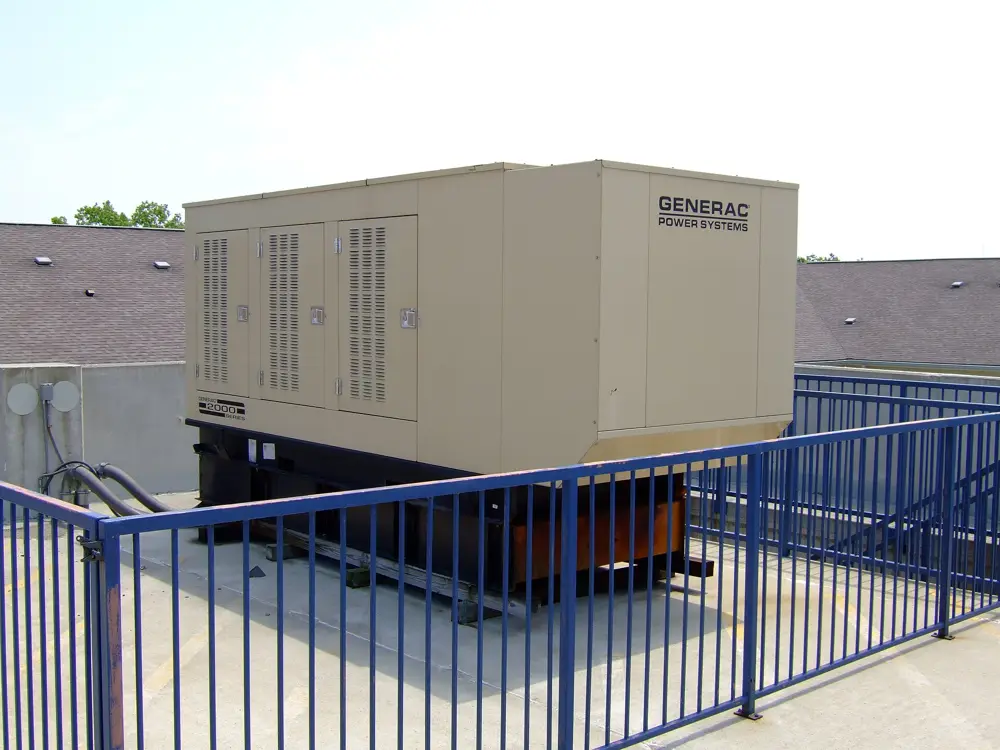
Clearances Come From the Manual and the Code
Every generator model has a manufacturer’s installation manual with minimum distances from the house wall, from windows, doors and other openings, and from fresh-air intakes. Local code and the fuel-gas code add their own rules. We do not list numbers here because they vary by model and code edition. Ask the installer to show you the page in the manual that sets the clearances for your unit.
Carbon Monoxide Is the Reason
Generator exhaust contains carbon monoxide. Clearances keep it from drifting into windows and vents. The CPSC warns that generator CO can kill in minutes. Whatever type you choose, keep working CO alarms on every level of the house.
Practical Factors
- Distance to both meters. Every foot of wire and gas pipe is paid for. HomeGuide lists $6–$8 per foot for wiring and $12–$25 per foot for gas line (HomeGuide).
- Drainage. Set the unit above low spots where water collects after a storm.
- Service access. Leave room to open the enclosure and work on it.
- Noise. Aim the louder side away from bedrooms and the neighbor’s patio.
- Looks and HOA rules. Many HOAs want the unit screened or kept out of street view.
- Utilities underground. Call 811 before any digging for the pad, trench or gas line. It is free and required.
The Pad
Most units sit on a composite or concrete pad, which HomeGuide prices at $150–$400. The pad must be level and stable, and on the soil the manufacturer specifies.
Rural Lots
On larger lots near Arcadia or north toward Guthrie, the choice is usually less cramped. The trade-off is often a longer propane line from the tank. Your installer should also check the setbacks the propane supplier needs for the tank itself.
Get a Free Generator Quote
Tell us a little about the house. An independent installer that serves your part of the metro will reach out to set up an on-site estimate.
Please note: Edmond Generators refers homeowners to independent generator installers. We are not a contractor.