Option 1: An Essential-Circuits Panel
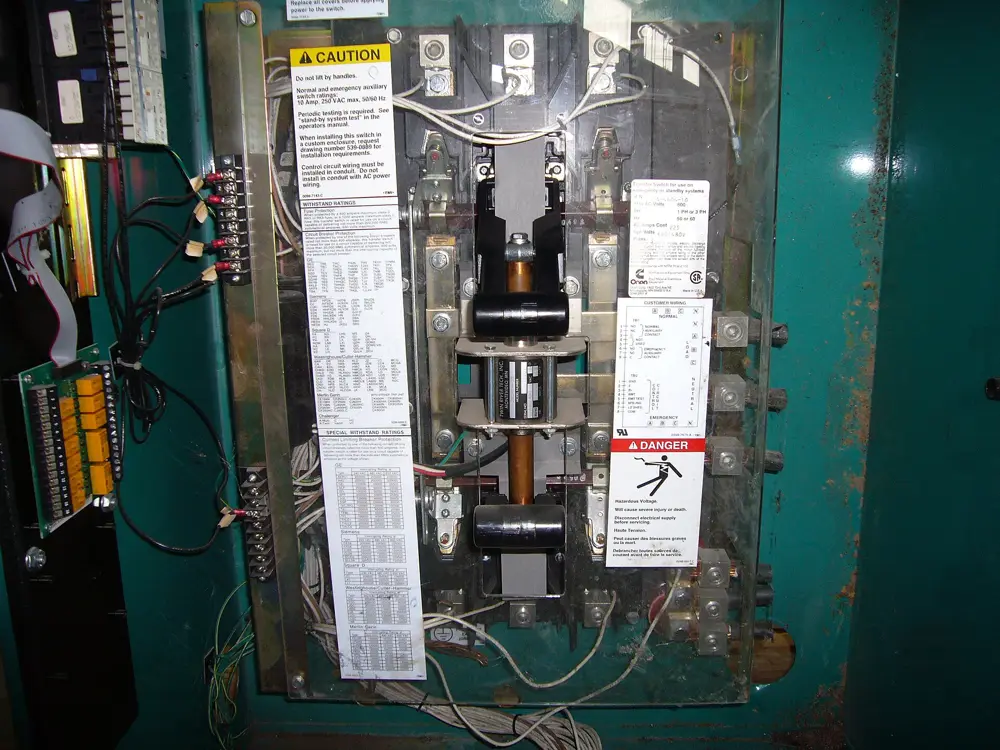
The electrician moves the circuits you choose (refrigerator, furnace, some lights and outlets, garage door, internet) into a small separate panel fed by the transfer switch. Only those circuits get generator power.
- Good for: tighter budgets, gas-heated homes, simple needs.
- Trade-off: anything not on the list stays dark, even if the generator has spare capacity.
Option 2: Whole House With Load Shedding
A service-rated transfer switch connects the whole house, and load-management modules switch off big appliances, such as a second AC unit, the dryer or an electric water heater, when the generator nears its limit. They come back when there is room.
- Good for: larger houses, families who want normal life to continue.
- Trade-off: a bigger unit and more equipment; you still can’t run every large load at once.
Making the List
| Usually essential | Often managed | Often left off |
|---|---|---|
| Fridge and freezer, furnace blower, sump pump, well pump, medical devices, internet, some lighting | Central AC, electric water heater, range, dryer | Pool equipment, hot tub, shop tools, EV charger |
Heat Pumps Need Extra Thought
A heat pump with electric backup heat strips can demand a huge amount of power in the coldest hours, exactly when an ice storm hits. Ask the installer how the system will handle the heat strips. Options include managing them or giving priority to the compressor.
EV Chargers
A Level 2 charger is a large load. If you have one, decide whether it should be locked out during outages or managed, and make sure the installer accounts for it.
Price Effect
Automatic transfer switches range from $600 to $2,500 for the part alone (HomeGuide). Load-management modules add to that. See the cost page.
Get a Free Generator Quote
Tell us a little about the house. An independent installer that serves your part of the metro will reach out to set up an on-site estimate.
Please note: Edmond Generators refers homeowners to independent generator installers. We are not a contractor.